

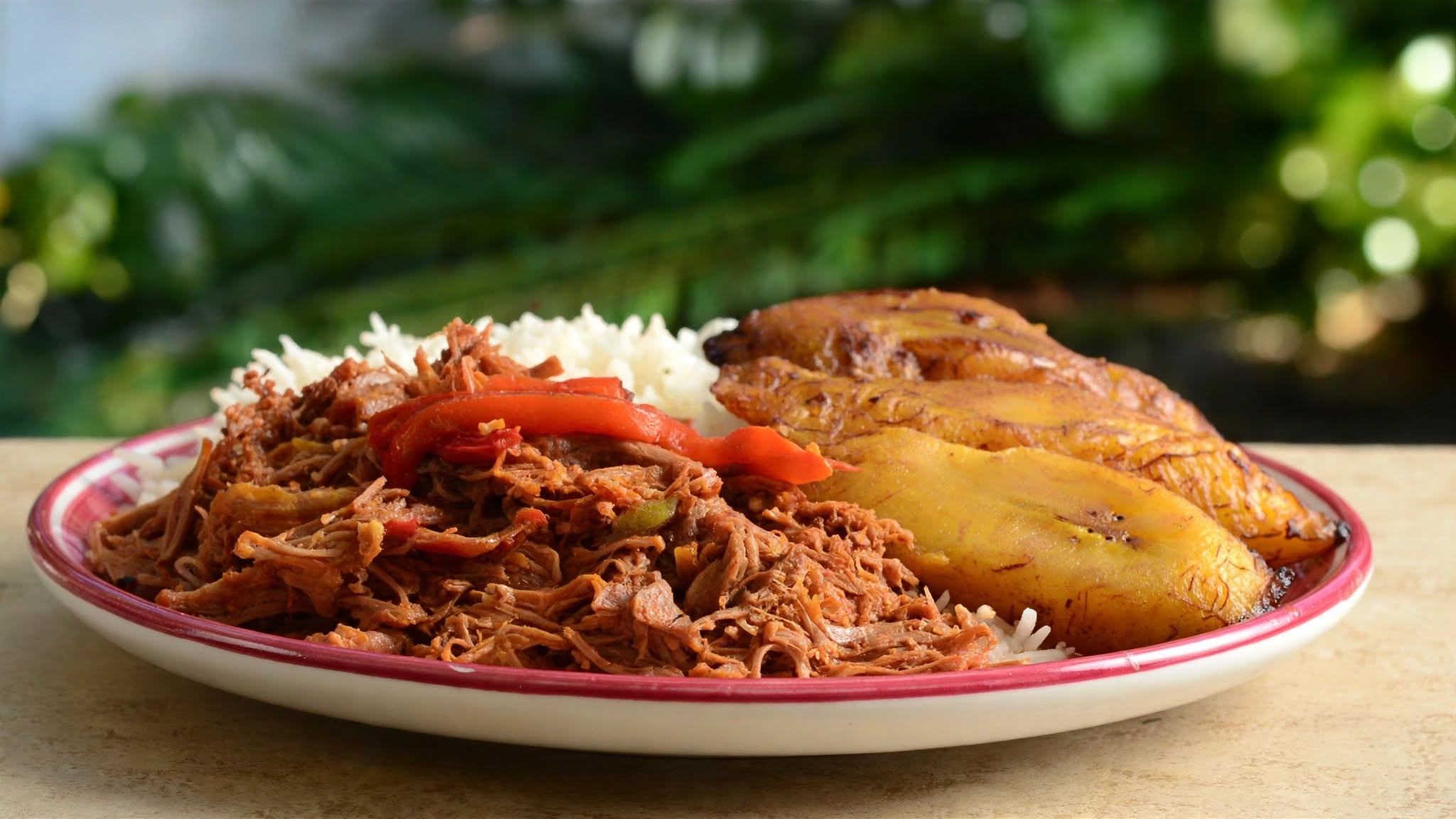
Searching for the best ropa vieja venezolana near me usually means one thing: you want tender, deeply seasoned shredded beef with the flavors of a Venezuelan kitchen, preferably at a restaurant close enough for dine-in, pickup, or delivery. There is one useful detail to know before you order. In Venezuela, this style of shredded beef is normally called carne mechada, while ropa vieja is the name most closely associated with the Cuban version. Knowing both terms makes it much easier to find the dish you actually want and recognize a restaurant serving a genuinely Venezuelan preparation.
Ropa Vieja or Carne Mechada? The Name Matters
Ropa vieja is a shredded-beef dish found in several Spanish-speaking culinary traditions, but it is especially identified with Cuba. The familiar Cuban preparation combines shredded beef with a tomato-based sauce, onions, and peppers. It is widely recognized as one of Cuba’s signature dishes.
In Venezuela, the comparable preparation is generally called carne mechada or carne desmechada. Venezuelan culinary references describe carne mechada as a central component of pabellón criollo, alongside white rice, black beans, and fried ripe plantains. It is also commonly eaten in arepas and empanadas.
| What you may see on a menu | Cuisine most associated with the name | Typical presentation |
|---|---|---|
| Ropa vieja | Cuban | Shredded beef with tomato, onions, and peppers, often paired with rice and beans |
| Carne mechada | Venezuelan | Seasoned shredded beef served in traditional plates, arepas, or empanadas |
| Pabellón criollo | Venezuelan | Carne mechada, white rice, black beans, and fried ripe plantain |
| Arepa pelúa | Venezuelan | Arepa filled with shredded beef and grated cheese |
So, if a search for best ropa vieja venezolana near me produces mostly Cuban restaurants, try searching for “Venezuelan carne mechada near me,” “pabellón criollo near me,” or “Venezuelan arepas with carne mechada.” Those phrases more closely match the terminology used in Venezuelan cooking.
What Authentic Venezuelan Carne Mechada Should Taste Like
Good carne mechada is more than boiled beef pulled into strands. The meat should become tender enough to shred easily while still retaining some texture. A Venezuelan preparation can build flavor with onion, garlic, peppers, tomato, cumin, salt, pepper, and other seasonings. Some traditional-style recipes also use Worcestershire sauce, while onoto, or annatto, may be used during cooking.
The finished meat should remain moist and flavorful rather than turning into a thin stew. VenezuelaTuya’s preparation cooks the seasoned shredded beef with onion, pepper, and tomato until much of the liquid reduces while the meat stays slightly moist.
The accompaniments matter just as much when carne mechada appears in pabellón criollo. Savory beef is balanced by earthy black beans, plain white rice, and sweet fried plantain. Those four elements form the classic Venezuelan plate.
How to Find the Best Venezuelan Shredded Beef Near You
Finding a good local option starts with the menu rather than the restaurant’s category label. A Venezuelan restaurant may call itself an arepa shop, South American restaurant, Latin café, bakery, or casual family restaurant without putting “Venezuelan” prominently in every listing.
Search for the dishes Venezuelan restaurants actually list
Instead of relying only on the exact phrase “ropa vieja venezolana,” look for:
- Carne mechada
- Pabellón criollo
- Arepa pelúa
- Empanada de carne mechada
- Venezuelan shredded beef
- Venezuelan arepas
Carne mechada is particularly useful as a search term because Venezuelan culinary sources use that name for the shredded beef served in pabellón and as a filling for arepas and empanadas.
Check recent menu photos
Restaurant menus change, so an old review or food photo may not reflect what the kitchen serves now. Check the restaurant’s current menu, recent customer photos, ordering page, or delivery listing before making a special trip.
Look for a complete pabellón criollo if you want a traditional Venezuelan experience. Its recognizable combination should center on carne mechada, white rice, black beans, and fried ripe plantains.
Read reviews about the beef, not just the restaurant
A high overall rating does not necessarily mean the carne mechada is the restaurant’s strongest dish. Look for recent comments specifically discussing the shredded beef.
Useful details include whether diners describe the beef as tender, moist, flavorful, fresh, or well seasoned. Repeated complaints about dry meat are more relevant to your decision than praise for unrelated dishes such as desserts or drinks.
Dish-specific reviews also help when choosing between several Venezuelan restaurants with similar overall ratings.
What to Order on Your First Visit
If you want to judge a Venezuelan restaurant by its carne mechada, pabellón criollo is an excellent starting point. It places the beef in one of its most recognizable Venezuelan settings and lets you taste how the kitchen handles rice, beans, plantains, and meat together. Venezuelan food references describe pabellón as one of the country’s most representative dishes.
An arepa filled with carne mechada is a better choice when you want something more compact. Carne mechada is commonly used in arepas and empanadas, while the arepa pelúa combines shredded beef with grated cheese.
For a first order, consider:
- Pabellón criollo for the complete traditional plate
- Arepa pelúa for shredded beef with cheese
- Empanada de carne mechada for a handheld option
- Carne mechada with rice when you want the beef to remain the focus
Cuban Ropa Vieja vs. Venezuelan Carne Mechada
The two preparations are closely related, which explains why their names are sometimes used interchangeably outside their home cuisines. Both feature beef cooked until tender enough to shred and then combined with flavorful vegetables and seasonings.
The main distinction is culinary context. Cuban ropa vieja is strongly associated with shredded beef simmered with tomatoes, onions, and peppers and has become one of the dishes most closely identified with Cuban cooking.
Venezuelan carne mechada, meanwhile, has an especially important role in pabellón criollo and as a filling for arepas and empanadas.
If your goal is specifically Venezuelan food, examine the rest of the menu. Dishes such as pabellón criollo, Venezuelan arepas, cachapas, tequeños, empanadas, black beans, and fried plantains can help identify a kitchen focused on Venezuelan cuisine even when the words “ropa vieja” never appear.
What Makes One Carne Mechada Better Than Another?
The best version should get three basic things right: texture, seasoning, and moisture.
The beef should separate into recognizable strands rather than becoming mushy. Tough or chewy meat usually suggests it has not cooked long enough, while extremely dry meat may have spent too much time reducing after shredding.
Seasoning should reach the meat itself. Tomato and peppers contribute flavor, but carne mechada should still taste distinctly of beef rather than tomato sauce alone.
Finally, the dish should work with whatever accompanies it. In pabellón criollo, strongly seasoned beef makes sense beside relatively simple rice, rich black beans, and sweet plantain.
Can You Find Authentic Ropa Vieja Venezolana Everywhere?
Not necessarily. Venezuelan restaurants are plentiful in some cities and uncommon in others, and menus can vary considerably.
That makes terminology especially important. If “ropa vieja near me” keeps showing Cuban restaurants, switch to “carne mechada Venezuelan near me.” If that produces few useful results, search for “pabellón criollo near me” or “Venezuelan arepas near me.”
Searching by specific dish often works better than searching for a broad cuisine because restaurant listings do not always categorize themselves consistently.
FAQs
Is ropa vieja Venezuelan or Cuban?
Ropa vieja appears in several regional cuisines, but the name is especially associated with Cuba. In Venezuela, the comparable shredded-beef preparation is generally called carne mechada.
What is Venezuelan ropa vieja called?
The name you are more likely to find on a Venezuelan restaurant menu is carne mechada or sometimes carne desmechada.
What comes with Venezuelan carne mechada?
In pabellón criollo, carne mechada is served with white rice, black beans, and fried ripe plantains.
What cut of beef is used for carne mechada?
Traditional Venezuelan recipes commonly use beef cuts suitable for cooking until tender and shredding. Venezuelan culinary references specifically mention falda among the cuts used for carne mechada.
What is an arepa pelúa?
An arepa pelúa is a Venezuelan arepa filled with shredded beef and grated cheese.
How do I find the best ropa vieja venezolana near me?
Search local menus for carne mechada, pabellón criollo, and arepa pelúa, then compare current menus, recent food photos, and dish-specific reviews. These terms usually target Venezuelan shredded beef more precisely than “ropa vieja” alone.
Conclusion
The fastest way to find the best ropa vieja venezolana near me is to search for the name Venezuelan kitchens are more likely to use: carne mechada. Look for it in pabellón criollo, arepas, empanadas, or as a standalone shredded-beef dish. A good version should be tender, moist, well seasoned, and supported by a flavorful combination of aromatics and tomato without losing the character of the beef. Using the right menu terms also makes it easier to distinguish Venezuelan carne mechada from Cuban ropa vieja and other regional shredded-beef preparations.
Read also Audrey Hepburn and Michael Phelps: Is There a Connection?