Martha Cumming: Her Life, Career, Marriage to Peter MacNicol, and Charity Work

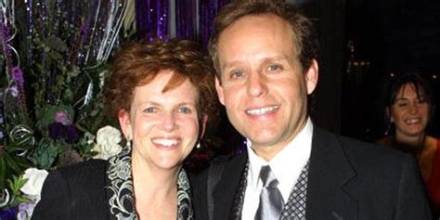
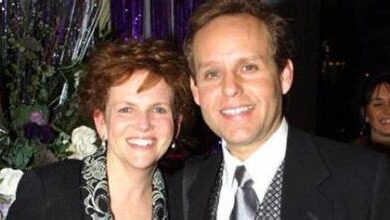
Martha Cumming, also known as Martha Sue “Marsue” Cumming, is a former theater executive and nonprofit volunteer best known as the wife of Emmy Award-winning actor Peter MacNicol. Beyond her connection to Hollywood, she has worked in children’s theater, helped develop youth arts programs, and supported college scholarships for students in Los Angeles.
Her professional history includes serving as executive director of New York’s 52nd Street Project, contributing to theatrical productions, and helping administer the Corie Williams Scholarship Fund.
Although MacNicol became widely recognized for his roles in Ally McBeal, Ghostbusters II, and Numb3rs, Cumming’s work took place largely behind the scenes. Historical theater records, newspaper interviews, and nonprofit publications offer a clearer picture of her accomplishments.
Who Is Martha Cumming?
Martha Cumming is an American arts administrator whose documented career has focused on theater, creative education, and community programs.
She appears under several versions of her name, including Martha Sue Cumming, Marsue Cumming, and Marsue Cumming MacNicol. The latter appears in professional theater reporting and historical nonprofit records.
Her work connects several organizations and activities:
- The 52nd Street Project: She served as executive director of the New York children’s theater organization.
- Virginia Avenue Project: She helped its founder establish a youth arts program in California.
- Professional theater: She worked as a dramaturg on an adaptation of All the King’s Men.
- Corie Williams Scholarship Fund: She helped administer and raise money for college scholarships.
- Arts and education: A federal arts report also documented her participation in theater grant review and identified her as an education committee consultant in 1996.
Her exact birth date, early education, and family background have not been established through comparably reliable public biographical records.
Martha Cumming’s Career at the 52nd Street Project
One of Cumming’s most important professional positions was executive director of the 52nd Street Project, a nonprofit children’s theater organization in Manhattan’s Hell’s Kitchen neighborhood.
Founded in 1981 by actor and playwright Willie Reale, the organization connects young people with experienced theater professionals.
Children are encouraged to write original plays, develop characters, learn performance skills, and collaborate with professional actors and directors.
The purpose extends beyond staging performances. The program gives young participants opportunities to practice communication, creativity, teamwork, and confidence.
When Did Martha Cumming Serve as Executive Director?
The organization’s original newsletters establish the timeline of her leadership.
Its December 1989 Project Update lists Marsue Cumming as executive director and Willie Reale as artistic director.
An October 1991 issue provides an even clearer account.
The newsletter includes a farewell article titled Cumming Is Going, announcing her departure from the executive director position after approximately three years.
It also refers to 95 plays during that period and identifies Carol Ochs as the incoming executive director.
These records place Cumming’s leadership roughly between 1988 and 1991.
This distinction matters because some later online biographies have questioned whether she actually held the position. The organization’s contemporary publications establish that she did. More recent nonprofit filings naming Carol Ochs do not contradict Cumming’s earlier tenure.
What Did Her Position Involve?
The executive director role placed Cumming on the administrative side of a developing children’s theater organization.
The December 1989 newsletter describes fundraising, grant proposals, volunteer coordination, youth activities, and theatrical productions.
The publication identifies Cumming among the staff responsible for managing the organization during this period.
The work involved sustaining a program that offered children opportunities to participate in theater without needing professional experience or industry connections.
Her involvement also created professional relationships that later helped similar programs develop outside New York.
Her Contributions to Professional Theater
Cumming’s theater experience was not limited to nonprofit management.
A September 23, 1990, article in the Los Angeles Times documents her work as a dramaturg on director Adrian Hall’s adaptation of Robert Penn Warren’s novel All the King’s Men.
A dramaturg helps develop theatrical material through research, script analysis, editing, and collaboration with the creative team.
For the Dallas Theater Center production, Cumming worked alongside dramaturg Oren Jacoby.
According to the newspaper’s account, the team began with a substantial collection of dialogue from Warren’s novel and worked to reshape it for the stage.
The process required extensive editing and rewriting.
Peter MacNicol also participated in the Dallas production, playing the character Jack Burden.
This professional credit adds an important dimension to Cumming’s biography: she contributed directly to the development of theatrical work rather than working exclusively in administration.
Helping Establish the Virginia Avenue Project
After her work in New York, Cumming assisted another children’s theater initiative in California.
The Virginia Avenue Project was founded in Los Angeles in 1991 by actress and playwright Leigh Curran.
Its approach drew inspiration from the 52nd Street Project, using theater and individual mentorship to help children develop creative and practical skills.
In her first-person biography, Curran explains that she had little experience establishing nonprofit organizations when she moved to Los Angeles.
Cumming helped guide her through grant writing and the practical steps involved in setting up the new organization.
That support gave Curran access to experience developed through an established New York theater program.
The Los Angeles Times independently documented Cumming’s involvement in an August 23, 1992, article.
The newspaper identified her as a former 52nd Street Project director who was advising the Virginia Avenue Project.
Curran remained the founder of the organization, while Kendis Heffley became its founding executive director. Cumming’s documented role was providing guidance during its early development.
The distinction is important: helping establish an organization is a meaningful contribution, but it is not the same as founding or directing it.
Her Involvement in Arts and Education Beyond Theater
A less frequently mentioned detail appears in the National Endowment for the Arts’ 1996 annual report.
The federal agency listed Marsue Cumming MacNicol as a lay panelist in its theater professional companies section.
The same entry described her at the time as a consultant to the UNICEF/LA Education Committee in Los Angeles.
This historical record provides another example of her involvement in arts and education-related activities beyond the 52nd Street Project.
It does not establish how long she held the consulting role or whether she maintained that affiliation afterward.
Martha Cumming and the Corie Williams Scholarship Fund
Cumming’s charitable work in Los Angeles included involvement with the Corie Williams Scholarship Fund.
The fund was established in memory of Corie Williams, a 17-year-old student who was killed in gang-related gunfire while riding a bus home from school on January 16, 1997.
Corie’s mother, Loretta Thomas, established scholarship assistance in her daughter’s memory.
The purpose was to help young people pursue educational opportunities that Corie herself never had the chance to experience.
What Was Martha Cumming’s Role?
Cumming became involved in supporting the scholarship program through administration and fundraising.
A December 8, 2003, Los Angeles Times investigation identified her as a volunteer administrator with the Corie Williams Scholarship Fund.
The article examined the substantial payments some celebrities received for appearances at charitable fundraising events.
Cumming expressed concern that such payments reduced the amount of money available to scholarship recipients.
The newspaper also reported that she had helped arrange an unpaid appearance by Peter MacNicol at a fundraising event.
Her involvement went beyond a celebrity endorsement: she participated in the fund’s administration and efforts to direct resources toward students.
What Did the Scholarship Program Accomplish?
The California Community Foundation’s 2009 annual report provides further detail.
Its profile of Loretta Thomas and Marsue MacNicol described how they worked together to manage the fund and award scholarships.
By the time of that report, the scholarship program had helped nearly 40 students with close to $150,000 in awards.
The report also described Cumming’s fundraising contributions and the two women’s involvement in mentoring scholarship recipients.
At that time, grants ranged from $100 to $5,000, helping students meet educational expenses.
These figures describe the program’s documented position in 2009; they should not be mistaken for its current totals.
Cumming played a meaningful administrative and fundraising role, while the fund’s origins remain closely tied to Corie’s mother and her efforts to honor her daughter.
Martha Cumming’s Marriage to Peter MacNicol
Martha Cumming is married to American actor Peter MacNicol, whose career includes theater, film, television, and voice acting.
Biographical accounts date their marriage to October 11, 1986.
MacNicol is particularly known for playing John Cage in the television series Ally McBeal, a performance that earned him a Primetime Emmy Award in 2001.
His other notable roles include Janosz Poha in Ghostbusters II, Dr. Larry Fleinhardt in Numb3rs, and Jeff Kane in Veep.
How Did Martha Cumming and Peter MacNicol Meet?
A story about their first meeting appeared in a 1989 People magazine account, later reproduced in biographical reporting.
According to that account, they met on a blind date involving the word-guessing game Password.
MacNicol recalled that Cumming successfully prompted him to guess the unusual word pneumatic, creating a memorable connection between them.
The original People article was not directly available for review, so the anecdote is best understood as a historically reported account rather than independently confirmed firsthand testimony.
The couple also shared professional theater connections.
As documented in the Los Angeles Times, MacNicol performed in the Dallas Theater Center adaptation of All the King’s Men, while Cumming worked on its dramaturgical development.
What Is Known About Martha Cumming’s More Recent Life?
One useful later record comes directly from the 52nd Street Project.
Its May 2024 newsletter includes a photograph of Cumming and Peter MacNicol visiting the organization.
The caption identifies her as its first executive director.
The publication establishes that the organization continued to recognize her historical contribution decades after she left the leadership role.
However, the newsletter does not specify the exact date of the visit.
The photograph also does not establish her current employment or whether she remains actively involved in the scholarship program.
Descriptions of her professional activities should therefore distinguish clearly between her documented historical roles and her present circumstances.
How Old Is Martha Cumming?
Martha Cumming’s exact age cannot be reliably established from the available institutional records and established biographical reporting.
Her documented professional history reaches back to the 1980s, but career dates alone cannot establish a person’s birth date.
Similarly, publicly available information does not provide a dependable basis for calculating her personal net worth.
Estimates of her age, finances, or current occupation published without supporting documentation should not be treated as established facts.
Why Martha Cumming’s Career Matters
Martha Cumming’s professional record connects several forms of public service.
At the 52nd Street Project, she held a leadership role in an organization that made theater accessible to children.
Through her assistance to Leigh Curran, she helped transfer experience from a successful youth arts program to a new initiative in California.
Her dramaturgical work placed her directly within the creative development of professional theater.
Later, her involvement with the Corie Williams Scholarship Fund contributed to a program helping students pursue higher education.
These activities provide a more complete understanding of her life than descriptions focused solely on her marriage to Peter MacNicol.
Her history is also an example of how arts administrators, mentors, and nonprofit volunteers can make substantial contributions without building careers as public-facing celebrities.
Sources
The following institutional publications and reporting were consulted for this article:
- The 52nd Street Project — Project Update, Volume 1, Issue 1, December 1989. Identifies Marsue Cumming as executive director.
https://52project.org/wp-content/uploads/2023/08/PU-01-DEC-1989.pdf - The 52nd Street Project — Project Update, Volume 8, October 1991. Documents Cumming’s departure and Carol Ochs’ appointment.
https://52project.org/wp-content/uploads/2023/08/PU-08-OCT-1991.pdf - Los Angeles Times — Jerome Weeks, Adrian Hall’s Southern Heart, September 23, 1990. Documents her dramaturgical work.
https://www.latimes.com/archives/la-xpm-1990-09-23-ca-2026-story.html - Los Angeles Times — Robert Koehler, A Star Role in Helping Children, August 23, 1992. Reports on her involvement with the Virginia Avenue Project.
https://www.latimes.com/archives/la-xpm-1992-08-23-ca-7286-story.html - Leigh Curran — Bio. First-person account of establishing the Virginia Avenue Project and receiving Cumming’s assistance.
https://leighcurran.net/2013/07/02/bio/ - National Endowment for the Arts — 1996 Annual Report, page 181. Lists Marsue Cumming MacNicol as a theater panelist and education committee consultant.
https://www.arts.gov/sites/default/files/NEA-Annual-Report-1996.pdf - Los Angeles Times — It Pays to Be a Star on Charity Circuit, December 8, 2003. Documents her volunteer administration of the Corie Williams Scholarship Fund.
https://www.latimes.com/archives/la-xpm-2003-dec-08-fi-charity8-story.html - California Community Foundation — 2009 Annual Report: Pursuing Windows of Opportunity and Change, page 19. Profiles Loretta Thomas and Marsue MacNicol’s scholarship work.
https://gun9iolence.issuelab.org/resources/8523/8523.pdf - The 52nd Street Project — Project Update, Issue 93, May 2024, page 14. Documents a later visit by Cumming and Peter MacNicol.
https://52project.org/wp-content/uploads/2024/04/PU-93-MAY-2024-1.pdf - EBSCO Research Starters — Peter MacNicol, published in 2024. Provides biographical context and identifies Cumming’s theater and scholarship involvement.
https://www.ebsco.com/research-starters/biography/peter-macnicol/